


Beyond Technology: Blockchain Is Ultimately About People
When blockchain is discussed in the media, the conversation usually revolves around cryptocurrencies, market volatility, smart contracts, or technological innovation. These subjects are undoubtedly important, yet they often overshadow what may be the most transformative consequence of decentralization: the emergence of entirely new forms of human connection. While blockchain has introduced revolutionary ways of transferring value and verifying ownership, its greatest achievement may ultimately be its ability to reshape how people organize themselves, build trust, collaborate, and create communities without relying on traditional institutions.
For centuries, social structures have been defined by centralized systems. Governments established citizenship, corporations organized professional life, banks mediated financial relationships, and cultural institutions determined which ideas, artists, or movements deserved recognition. Blockchain does not eliminate these structures, but it offers an alternative model in which communities can coordinate themselves directly, united not by geography or hierarchy but by shared values and common purpose.
In this sense, decentralization is as much a social revolution as it is a technological one.
Trust Without Intermediaries
Trust has always been one of civilization’s most valuable resources. Every society depends upon systems that enable strangers to cooperate, exchange value, and pursue collective goals. Traditionally, this trust has been established through institutions that guarantee agreements and enforce rules. Banks verify financial transactions, governments maintain legal systems, and corporations coordinate economic activity.
Blockchain proposes a fundamentally different approach. Instead of placing confidence in centralized organizations, participants rely on transparent protocols whose rules are visible, verifiable, and applied equally to everyone. Technology replaces many functions previously performed by intermediaries, allowing communities to cooperate directly while maintaining confidence in the integrity of the system itself.
This shift has profound psychological implications. Trust gradually moves away from institutional authority and toward shared infrastructure, enabling people from vastly different backgrounds to collaborate despite having never met in person.

The Rise of Digital Tribes
Human beings have always sought belonging. Throughout history, families, villages, religious institutions, nations, and professional organizations provided individuals with identity and community. In the digital age, however, geographical proximity is no longer the primary factor that determines social connection.
Blockchain has accelerated the emergence of what might be described as digital tribes—communities formed around shared beliefs rather than shared locations. These communities bring together artists, developers, collectors, educators, entrepreneurs, researchers, and enthusiasts who may live thousands of kilometers apart yet collaborate as if they occupied the same physical space.
What binds these communities together is not nationality, language, or institutional membership, but a common vision of decentralization, openness, creativity, and collective participation. Their identity is constructed through contribution rather than inheritance.
DAOs: A New Model for Collective Organization
Among the most remarkable innovations introduced by blockchain are Decentralized Autonomous Organizations, more commonly known as DAOs. While the terminology may sound highly technical, the underlying concept is surprisingly human. A DAO enables a community to organize itself according to transparent rules that are collectively governed by its participants rather than directed by a centralized leadership structure.
Instead of relying on traditional corporate hierarchies, members contribute ideas, vote on important decisions, allocate shared resources, and participate in shaping the organization’s future. Governance becomes an ongoing conversation rather than a series of directives issued from above.
This model challenges long-established assumptions about leadership and institutional authority. It suggests that communities can coordinate effectively through shared responsibility, open participation, and transparent decision-making rather than centralized control.
Although DAOs continue to evolve, they already demonstrate that organizational structures once considered indispensable may no longer represent the only path toward effective collaboration.
Creativity Flourishes Through Community
One of the most inspiring aspects of decentralized culture is the way it encourages collective creativity. Artists no longer depend exclusively on galleries to reach audiences. Developers no longer require large corporations to distribute software. Writers, musicians, designers, educators, and collectors increasingly collaborate through decentralized ecosystems where ideas flow freely across disciplines and borders.
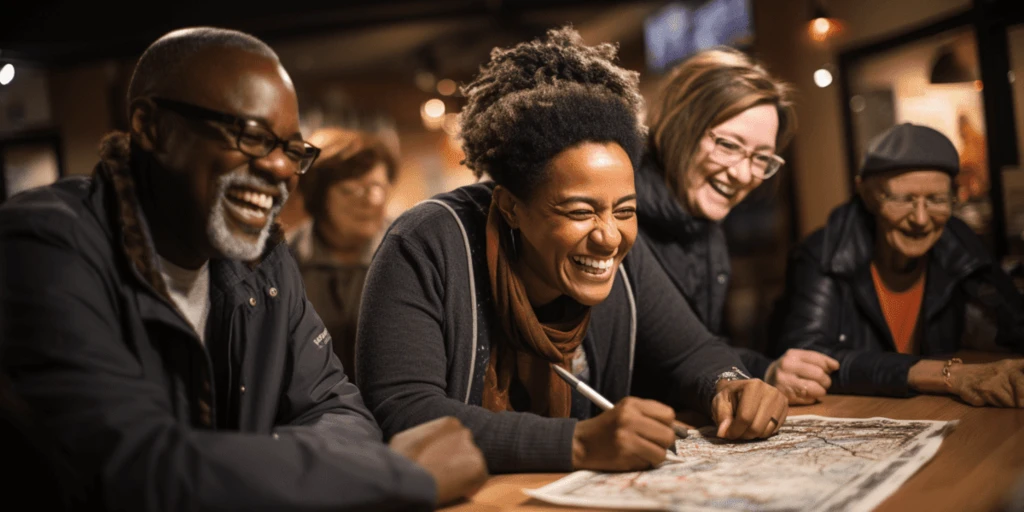
Within these communities, creativity becomes less competitive and more collaborative. Members support one another by sharing knowledge, funding artistic initiatives, mentoring newcomers, organizing exhibitions, translating educational resources, and contributing to projects whose success benefits the entire ecosystem.
Blockchain provides the infrastructure, but it is the community that generates cultural momentum.
The result is an environment where innovation emerges organically from continuous interaction rather than from centralized planning.
Reputation Replaces Formal Authority
Traditional institutions often establish credibility through titles, organizational positions, or formal credentials. In decentralized communities, reputation is built differently. It grows through visible contribution, consistent participation, and demonstrated expertise over time.
An individual earns respect not because of institutional affiliation but because of meaningful actions within the community. Every educational article, software contribution, governance proposal, artistic collaboration, or mentoring effort strengthens a participant’s standing within the network.
This meritocratic dynamic creates a culture in which influence must continually be earned rather than simply maintained. Authority becomes fluid, reflecting ongoing engagement rather than static hierarchy.
Such an environment encourages responsibility while fostering greater openness to new voices capable of contributing valuable ideas.
Funding Culture Without Gatekeepers
Historically, many creative and cultural initiatives depended upon patrons, publishers, galleries, investors, or governmental institutions willing to provide financial support. While these organizations continue to play vital roles, blockchain introduces additional mechanisms through which communities can collectively finance projects they consider meaningful.
Crowdfunding, community treasuries, decentralized grants, and token-based participation allow individuals from around the world to support artists, researchers, educational initiatives, and public goods directly. Financial backing becomes an expression of shared belief rather than institutional approval.
This transformation expands opportunities for creators whose work might otherwise remain overlooked within conventional systems. Communities become active participants in shaping cultural development instead of merely consuming finished products.
Global Collaboration Without Borders
Perhaps the most extraordinary feature of blockchain communities is their ability to transcend geographical limitations. A software developer in Argentina, a digital artist in Ukraine, a collector in Singapore, an educator in Canada, and a designer in South Africa can contribute to the same project with remarkable efficiency despite living on different continents.
Time zones replace office hours.
Shared goals replace organizational charts.
Open communication replaces bureaucratic procedure.
This borderless collaboration reflects one of blockchain’s deepest cultural contributions: the realization that meaningful human cooperation no longer depends upon physical proximity. Shared purpose has become a more powerful organizing principle than shared geography.

The Challenges of Decentralized Communities
Despite their remarkable potential, decentralized communities are not without challenges. Coordinating large groups without centralized leadership can be complex, governance processes may become slow or contentious, and balancing openness with effective decision-making requires continual experimentation.
These difficulties should not be viewed as evidence of failure but as natural aspects of any evolving social model. Every significant institutional innovation throughout history has undergone periods of adjustment before reaching maturity. Democracies, scientific institutions, universities, and modern corporations all developed gradually through experimentation, refinement, and adaptation.
Similarly, decentralized communities remain works in progress, continuously improving through the contributions of the very people who participate within them.
The Future of Human Cooperation
Looking ahead, it seems increasingly likely that blockchain communities will not replace every traditional institution. Instead, they will coexist alongside them, offering alternative models for organizing creativity, governance, education, philanthropy, entrepreneurship, and cultural exchange.
Future generations may move effortlessly between centralized and decentralized environments, selecting whichever structure best serves a particular purpose. What will remain constant is the growing recognition that trust can emerge not only from institutions but also from transparent networks built upon shared values and collective responsibility.
The most enduring legacy of blockchain may therefore be neither digital currencies nor financial innovation, but a renewed understanding of how human beings choose to cooperate.
Conclusion
The story of blockchain is ultimately not about algorithms, tokens, or distributed ledgers. It is about people discovering new ways to trust one another, collaborate across borders, and build communities independent of traditional gatekeepers. Decentralized networks remind us that technology is most meaningful when it strengthens human relationships rather than replacing them.
The communities emerging around blockchain demonstrate that cooperation does not require centralized authority to flourish. It requires transparency, shared purpose, mutual respect, and the willingness of individuals to contribute toward something larger than themselves.
In an increasingly interconnected world, these networks of trust may become one of the defining social innovations of the twenty-first century. They illustrate that while technology can provide the infrastructure, it is always people who transform systems into living cultures.