

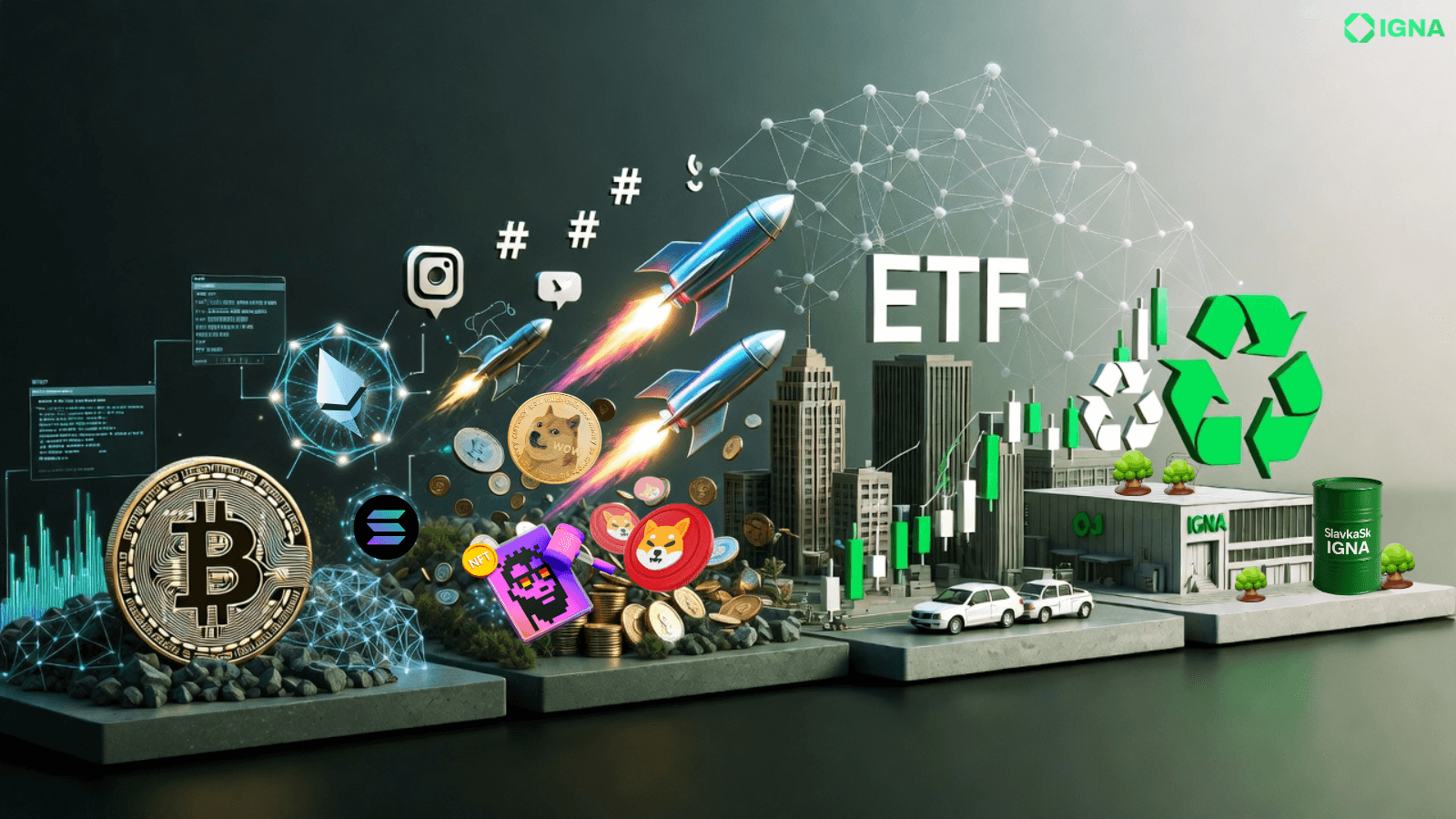
Every era imagines its future through the lens of its greatest innovation.
The Industrial Revolution envisioned cities powered by machines. The Information Age imagined a world connected by the internet. Today, the blockchain revolution invites us to imagine something even more profound—not simply a new technology, but a new architecture for society itself.
The question is no longer whether cryptocurrency will survive.
The more compelling question is this:
What happens when decentralized systems become ordinary?
From Institutions to Protocols
For centuries, institutions have acted as the guardians of trust.
Banks safeguard wealth.
Governments maintain records.
Publishers validate authorship.
Auction houses authenticate art.
Social networks own our digital identities.
Blockchain introduces a radically different model.
Instead of trusting institutions, individuals increasingly trust transparent protocols—open systems whose rules are visible, verifiable, and shared by everyone.
This shift is subtle but transformative.
Power begins moving from organizations toward networks.
Ownership Without Borders
The internet allowed information to travel freely.
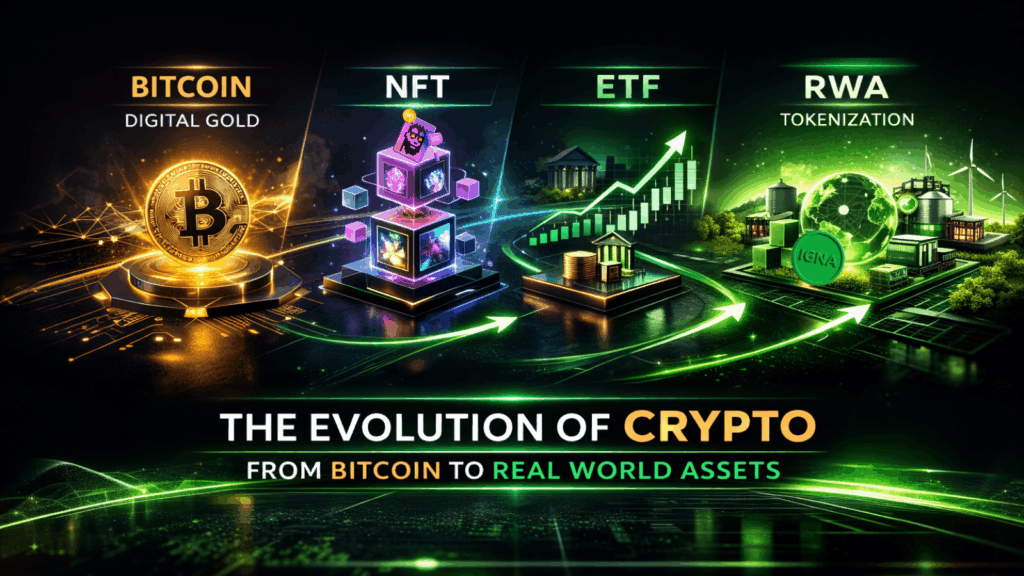
Blockchain allows ownership to travel just as easily.
Digital assets are no longer confined by geography, national banking systems, or traditional intermediaries. A creator in Buenos Aires can sell artwork directly to a collector in Seoul. A musician in Lagos can receive royalties instantly from listeners around the world. A developer in Kyiv can contribute to a decentralized protocol governed by participants on every continent.
In Web3, ownership becomes native to the internet.
Not a document.
Not a promise.
A cryptographically verifiable reality.
The Rise of the Digital Citizen
Nationality has long shaped economic opportunity.
Where you were born often determined which currencies you could access, which markets you could enter, and which financial systems you could trust.
Web3 introduces another identity alongside citizenship: participation.
Communities increasingly form around shared values rather than shared geography.
People contribute code, design, governance, education, or creativity to decentralized ecosystems where reputation is earned through participation rather than institutional credentials.
The digital citizen is not defined by borders.
They are defined by contribution.
Creativity Becomes an Economy
For generations, artists depended on galleries.
Writers depended on publishers.
Musicians depended on record labels.
Blockchain offers creators another path.
Smart contracts allow artists to receive royalties automatically.
Collectors can support creators directly.
Communities can collectively finance ambitious projects without relying on traditional gatekeepers.
The relationship between artist and audience becomes more collaborative than transactional.
Ownership evolves into participation.
Collecting becomes patronage.
Culture becomes community.
The Metaverse Beyond the Buzzword
The term “metaverse” is often associated with virtual reality headsets and futuristic avatars.
Its deeper significance is philosophical.
The metaverse represents persistent digital spaces where identity, ownership, creativity, and commerce coexist.
A virtual gallery may become as culturally significant as a physical museum.
Digital architecture may acquire historical value.
Entire creative careers may exist primarily inside immersive online environments.
Physical reality does not disappear.
It expands.
The Evolution of Value
Throughout history, societies have repeatedly redefined what possesses value.
Gold.
Land.
Factories.
Information.
Attention.
Today, digital scarcity introduces another category.
A unique digital artwork.
A governance token.
A blockchain identity.
A virtual collectible.
These assets derive value not from physical material but from shared recognition, cultural significance, and verifiable authenticity.
The economy increasingly reflects imagination as much as industry.
Decentralized Communities
Traditional organizations operate through hierarchy.
Web3 experiments with coordination instead.
Communities organize themselves through decentralized governance, shared incentives, and transparent voting mechanisms.
People no longer participate merely as customers.
They become contributors.
Owners.
Builders.
Curators.
This transformation alters not only economics but also social identity.
Belonging becomes something people actively create rather than passively inherit.
Art in the Age of Infinite Possibility
Every technological revolution produces new artistic languages.
The Renaissance explored perspective.
Photography transformed realism.
Cinema redefined storytelling.
Blockchain introduces entirely new creative dimensions.
Art can exist simultaneously as a physical painting and a permanently recorded digital asset.
Its history becomes transparent.
Its provenance becomes immutable.
Its audience becomes global from the moment of creation.
The canvas is no longer the final destination.
It becomes one layer of a larger narrative.
The Responsibility of Freedom
Decentralization offers extraordinary opportunities.
It also demands greater responsibility.
Without intermediaries, individuals become custodians of their own assets, identities, and decisions.
Freedom and accountability become inseparable.
This represents perhaps the greatest cultural shift of all.
Web3 is not merely about removing institutions.
It is about encouraging individuals to become active participants in systems they once observed from a distance.
Beyond Utopia
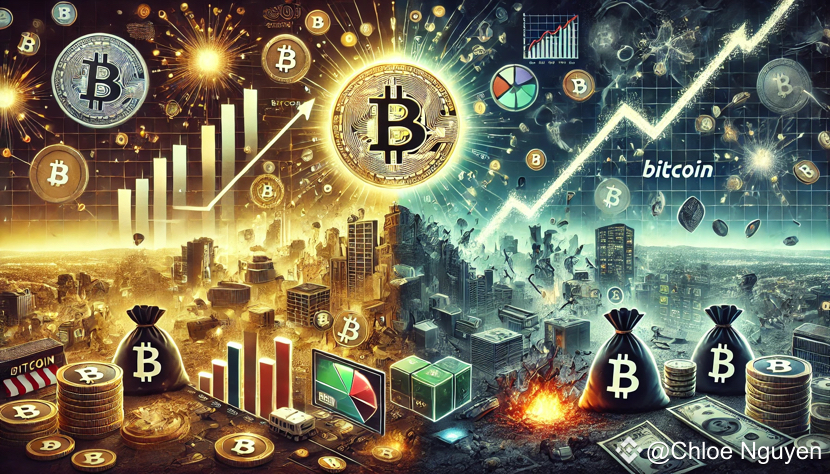
Every transformative technology inspires both optimism and skepticism.
Blockchain is no exception.
Some predictions will prove exaggerated.
Some innovations will fail.
Others will quietly reshape everyday life until they become invisible—much like the internet itself.
The future will almost certainly combine centralized and decentralized systems rather than replacing one with the other.
Yet the direction of change is unmistakable.
Society is gradually moving toward greater digital ownership, more open participation, and new models of collaboration that transcend geography.
Conclusion
The future of cryptocurrency is not ultimately about coins.
It is about culture.
It is about redefining how people create, collaborate, exchange value, and build trust in a digital world.
Web3 is not simply the next version of the internet.
It is an evolving vision of society where ownership becomes programmable, creativity becomes borderless, and communities organize themselves around shared purpose instead of centralized authority.
Whether that future arrives gradually or through sudden breakthroughs, one thing is increasingly clear:
The decentralized age is not waiting to be invented.
It is already being imagined—and created.
Visual Anchor: An original futuristic painting filled with luminous neon structures, decentralized networks, digital architecture, and cyberpunk atmospheres, portraying a vibrant Web3 metropolis where physical and virtual realities seamlessly converge.