

Every Cultural Revolution Creates a New Aesthetic
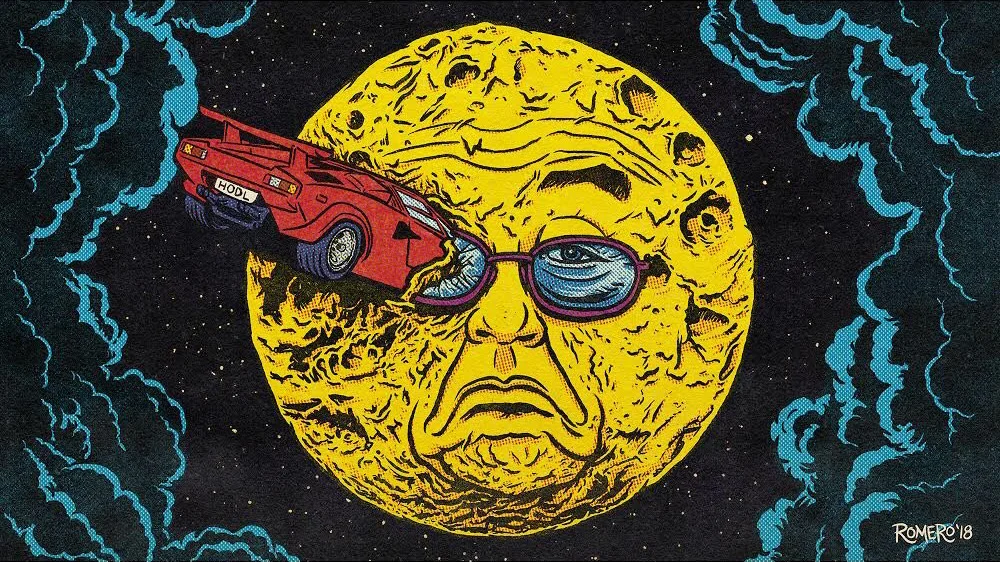
Throughout history, revolutionary ideas have never remained confined to philosophy, politics, or technology. They have always found expression through visual culture. The Renaissance introduced a new understanding of perspective that reflected humanity’s changing perception of knowledge and science. The Industrial Revolution inspired movements that embraced geometry, machinery, and abstraction. Pop Art celebrated consumer culture through bold colors and instantly recognizable symbols, while street art transformed urban walls into platforms for social commentary. In much the same way, the emergence of blockchain has generated an entirely new artistic vocabulary—one that reflects the values, contradictions, and ambitions of a decentralized digital civilization.
Crypto art should not be understood simply as art about cryptocurrency. It represents a broader visual language born from the convergence of blockchain technology, internet culture, digital ownership, open-source philosophy, and global online communities. Just as Impressionism cannot be reduced to paintings of sunlight or Cubism to fragmented portraits, crypto art cannot be defined merely by the appearance of Bitcoin logos or blockchain diagrams. Its true identity lies in the aesthetic principles that have emerged from the decentralized worldview itself.
Decentralization as an Artistic Principle
One of the most distinctive characteristics of crypto art is that decentralization is expressed not only through subject matter but also through composition. Traditional visual narratives often rely on a single focal point that directs the viewer’s attention. Decentralized aesthetics, by contrast, frequently embrace complexity, distributed structures, interconnected elements, and multiple visual entry points. Rather than guiding the eye toward one dominant subject, these compositions encourage exploration, inviting viewers to discover relationships hidden within intricate networks of symbols and forms.
This approach reflects the architecture of blockchain itself. A decentralized network has no singular center of authority, and similarly, many crypto artworks reject rigid hierarchies in favor of layered visual ecosystems where meaning emerges gradually through interaction. Every symbol contributes to a larger narrative, just as every participant contributes to the resilience of a decentralized protocol.
Glitch as a Symbol of Transformation
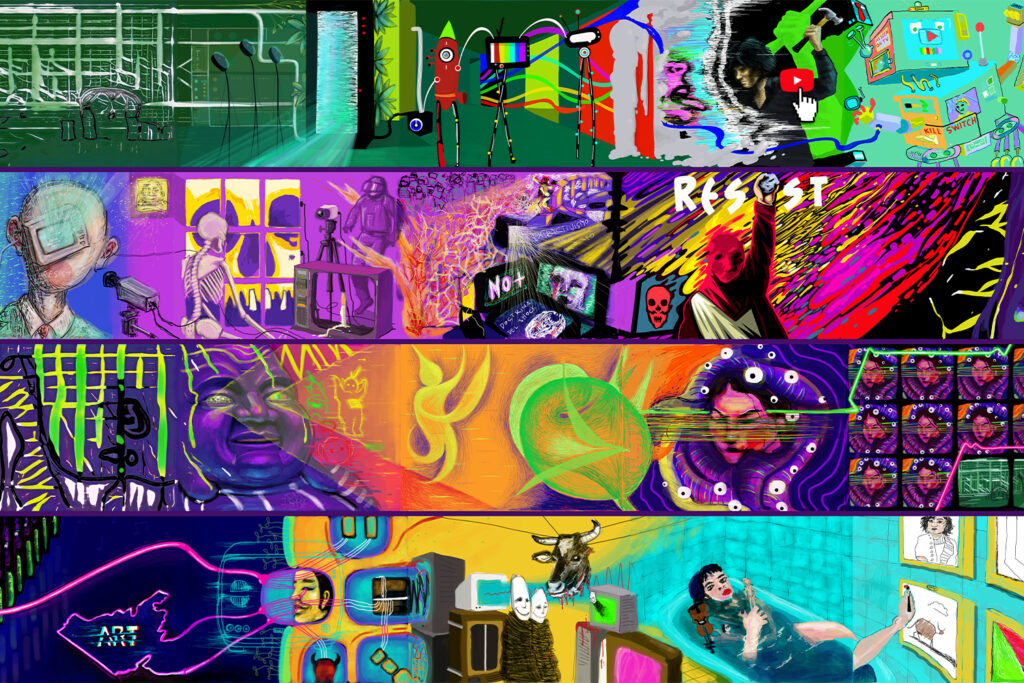
Among the defining visual motifs of crypto art, glitch aesthetics occupy a particularly significant place. At first glance, digital distortion appears to represent imperfection or technological failure. Yet within blockchain culture, glitches often symbolize transition rather than error. They evoke the moment when one reality dissolves into another, when established systems fragment and new structures begin to emerge.
Glitch art captures the instability that accompanies every historical transformation. Pixels shift, images fracture, colors bleed beyond their expected boundaries, and familiar forms become fragmented. These visual disruptions remind viewers that innovation rarely appears polished from the beginning. Every cultural revolution passes through moments of uncertainty before establishing a new order.
In crypto art, glitches are therefore less about broken technology than about the birth of entirely new paradigms.
Geometry, Algorithms, and Invisible Architecture
Blockchain itself is invisible. It cannot be observed directly, touched, or framed within conventional imagery. As a result, artists often translate its abstract architecture into visual metaphors built from geometry, repetition, and algorithmic structures.
Hexagonal grids, interconnected nodes, layered cubes, recursive patterns, and fractal compositions frequently appear throughout crypto-inspired works. These geometric systems communicate ideas of transparency, mathematical precision, and interconnectedness without relying on literal representations of code.
Such imagery reflects a profound shift in artistic inspiration. Instead of drawing exclusively from nature or industrial landscapes, contemporary creators increasingly find beauty in algorithms, networks, encryption, and computational order. Mathematics itself becomes a source of visual poetry.
The Influence of Internet Culture
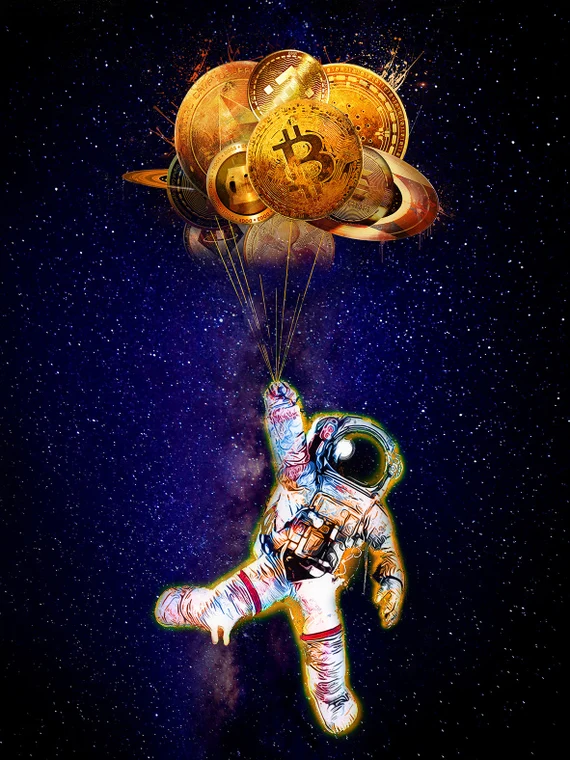
No artistic movement develops in isolation from its cultural environment, and crypto art is deeply intertwined with the language of the internet. Memes, emojis, pixel graphics, browser interfaces, QR codes, social media references, and gaming aesthetics have become legitimate artistic materials rather than disposable fragments of online communication.
Unlike traditional visual culture, which often separated high art from popular culture, crypto art embraces their coexistence. A humorous internet meme can appear alongside classical symbolism. A Renaissance composition may incorporate blockchain addresses or cryptographic references. Neon typography can coexist with painterly brushstrokes. These combinations are not accidental; they reflect the reality of a generation whose cultural experience unfolds simultaneously across museums, social platforms, online forums, and decentralized communities.
The internet has become not merely a medium for displaying art but an essential source of artistic inspiration itself.
Generative Creativity and the Dialogue Between Human and Machine
Another defining characteristic of crypto art is its openness to generative processes. Artists increasingly collaborate with algorithms, allowing computational systems to participate in the creative process while maintaining human direction and conceptual intent. This collaboration does not diminish artistic authorship; instead, it expands the range of possibilities available to contemporary creators.
Generative art reflects one of blockchain culture’s central ideas: systems can produce extraordinary complexity through transparent rules. Just as decentralized networks operate without centralized control, generative artworks often evolve from simple algorithms into intricate visual ecosystems filled with unexpected variations and emergent beauty.
The artist remains the author of the vision, but the creative dialogue now includes mathematical structures alongside intuition and emotion.
Easter Eggs and Hidden Narratives
One of the most fascinating aspects of crypto art is its layered symbolism. Much like blockchain transactions contain encoded information beneath their visible surface, crypto-inspired artworks frequently conceal references that reward attentive viewers. Wallet addresses may be subtly embedded within compositions. Binary sequences, hexadecimal patterns, cryptographic hashes, famous block numbers, or historical dates connected to blockchain milestones can become integral elements of the visual narrative.
These hidden details function as contemporary “easter eggs,” inviting viewers to engage with the artwork repeatedly rather than consuming it in a single glance. Every return reveals another layer of meaning, transforming observation into exploration.
This participatory quality distinguishes crypto art from more conventional forms of visual storytelling. The artwork becomes an interactive intellectual experience, encouraging curiosity rather than passive admiration.
Color as Emotional Technology
The color palette of crypto art has developed its own recognizable identity. Electric blues, vibrant oranges, luminous greens, ultraviolet purples, and intense neon gradients frequently dominate compositions, reflecting the luminous environments of digital interfaces and cybernetic futures. Yet these colors are not chosen merely because they appear futuristic. They communicate acceleration, connectivity, innovation, and the energy of an ecosystem that never sleeps.
Against these vivid digital tones, many artists deliberately introduce organic textures, expressive brushwork, and imperfect surfaces. The contrast creates a compelling dialogue between machine precision and human emotion, reminding viewers that technology remains meaningful only because it serves human creativity.
This balance between the digital and the tactile has become one of the defining characteristics of contemporary crypto aesthetics.
Toward a New Artistic Canon
Every influential artistic movement eventually develops a recognizable visual canon—a collection of symbols, techniques, and references that define its identity across generations. Crypto art is currently undergoing that process. What began as experimental digital imagery has evolved into a sophisticated visual language capable of expressing complex ideas about ownership, decentralization, identity, freedom, and community.
Its symbols continue to evolve alongside blockchain technology itself, but their growing consistency suggests that crypto art is no longer an isolated niche within digital culture. It is becoming one of the defining artistic movements of the decentralized age, reflecting not only technological innovation but also profound changes in how society understands trust, creativity, and cultural value.
Conclusion
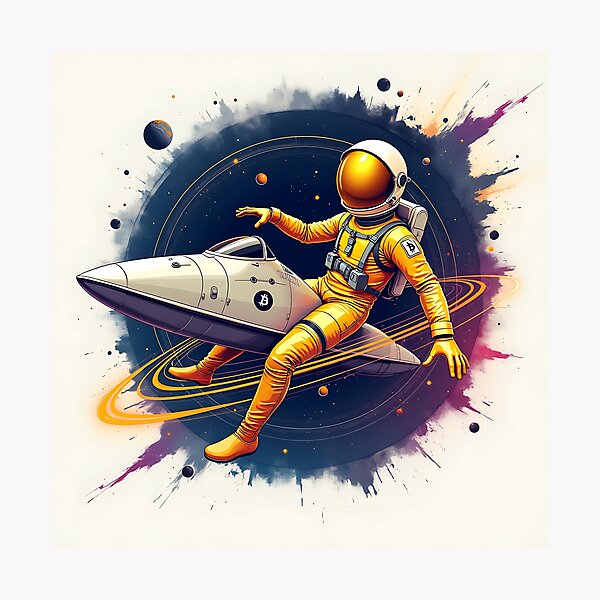
The aesthetics of decentralization extend far beyond recognizable cryptocurrency symbols or futuristic visual effects. They represent the emergence of a new artistic language shaped by blockchain philosophy, internet culture, computational creativity, and global digital communities. Crypto art transforms invisible networks into visible narratives, translating mathematical structures into emotional experiences and decentralized ideas into compelling visual forms.
As this language continues to mature, it will increasingly influence not only artists working within blockchain ecosystems but contemporary visual culture as a whole. Just as Pop Art became inseparable from the consumer age and Modernism reflected industrial transformation, the aesthetics of decentralization may ultimately become one of the defining visual signatures of the twenty-first century.