

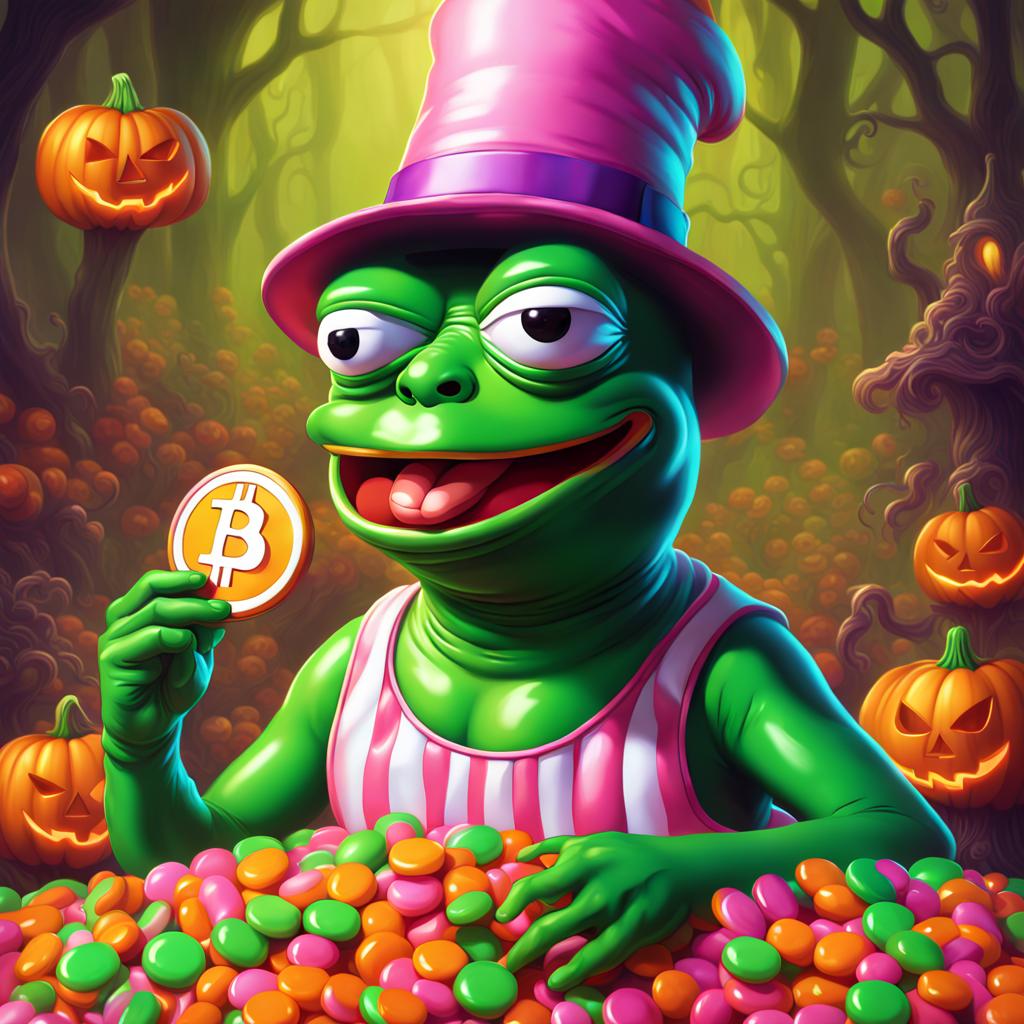
When a Joke Becomes a Financial Revolution
For generations, economics and finance were surrounded by an image of seriousness. Markets were represented by skyscrapers, trading floors, complex charts, and professionals in tailored suits discussing monetary policy in carefully measured language. Value appeared to belong exclusively to institutions that projected authority, stability, and tradition. Few could have imagined that one day a smiling Shiba Inu, a green internet frog, or an absurd image shared millions of times online would become symbols associated with assets worth billions of dollars.
Yet this is precisely what happened.
The rise of meme coins represents one of the most fascinating cultural phenomena of the digital age because it demonstrates that value is never determined solely by technology or economics. It is also shaped by attention, emotion, collective imagination, and the stories people choose to believe together. Dogecoin, Pepe, and countless other meme-inspired cryptocurrencies reveal that internet culture has evolved from entertainment into a force capable of influencing financial markets, artistic movements, and global communities.
To dismiss this phenomenon as irrational would be to overlook one of the defining characteristics of twenty-first-century culture: in a networked world, ideas spread at the speed of emotion, and humor has become one of the most powerful forms of communication humanity has ever created.
Memes Are the Native Language of the Internet
Long before meme coins existed, memes had already become the dominant language of online culture. Unlike traditional forms of communication, which often require lengthy explanations or carefully constructed arguments, a meme can communicate an idea, an emotion, or an entire cultural reference in a single image. It compresses complex experiences into instantly recognizable visual symbols that travel effortlessly across languages, countries, and generations.
The remarkable power of memes lies in their adaptability. They evolve continuously, changing meaning as communities reinterpret them through new contexts. A single image may begin as an innocent joke before becoming a political statement, a cultural reference, or even an economic symbol. This ability to transform while remaining instantly recognizable makes memes uniquely suited to the decentralized environment of the internet.
Blockchain did not invent meme culture, but it provided the infrastructure through which memes could acquire verifiable economic value. What had previously existed only as shared cultural capital could suddenly become part of digital ownership and financial participation.
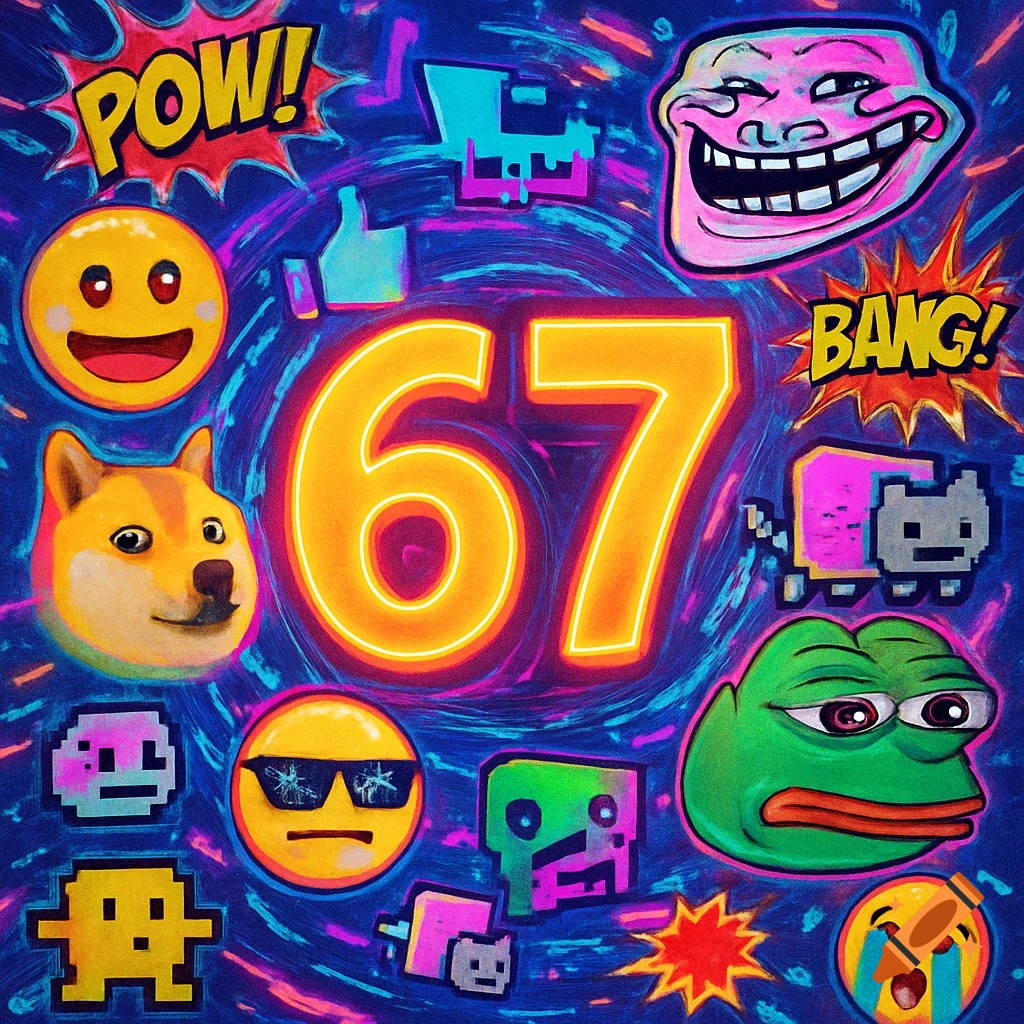
Dogecoin: When Irony Became Reality
Perhaps no story illustrates this transformation more vividly than Dogecoin. Created in 2013 as a playful parody of the rapidly expanding cryptocurrency industry, Dogecoin deliberately embraced absurdity. Its creators did not attempt to position it as a revolutionary financial protocol or groundbreaking technological innovation. Instead, they chose a smiling Shiba Inu from one of the internet’s most beloved memes, openly acknowledging the project’s humorous origins.
Ironically, this honesty became its greatest strength.
Dogecoin demonstrated that communities are often built more effectively through shared humor than through technical complexity. Millions of people who found traditional finance intimidating discovered that a lighthearted, welcoming community could provide an accessible entry point into the broader world of blockchain. What began as satire gradually evolved into one of the most recognizable cryptocurrencies in the world, proving that collective enthusiasm can transform even the most unexpected symbols into cultural landmarks.
Dogecoin challenged the assumption that seriousness is a prerequisite for significance. Sometimes, laughter is a far more powerful foundation for community.
Pepe and the Evolution of Internet Mythology
If Dogecoin introduced humor into cryptocurrency, Pepe expanded the relationship between internet mythology and digital value. Few images have experienced as many transformations as the green frog originally created by artist Matt Furie. Over the years, Pepe has appeared in countless variations, becoming a symbol interpreted differently by diverse online communities across the globe.
Within the crypto ecosystem, Pepe evolved once again. Detached from many of its earlier associations, it became an emblem of speculative culture, internet identity, and the unpredictable creativity of decentralized communities. The frog’s journey illustrates a remarkable characteristic of digital culture: symbols are never static. They accumulate meanings through collective participation, constantly reinvented by those who adopt and reinterpret them.
This process resembles mythology more than branding. Unlike corporate logos carefully managed by centralized organizations, memes belong to the communities that perpetuate them. Their significance grows organically rather than being imposed from above.
Attention Has Become a Form of Capital
Traditional economics often focuses on scarce physical resources, productive capacity, and financial instruments. The digital economy has introduced another scarce resource that increasingly determines value: human attention.
Every day, billions of people compete for visibility within an endless stream of information. In this environment, attention itself functions as a form of currency. Memes excel because they capture attention with extraordinary efficiency. They spread rapidly, encourage participation, and invite reinterpretation rather than passive consumption.
Meme coins harness this dynamic by transforming cultural attention into economic participation. Communities do not merely observe a meme; they invest in its continued relevance. The meme becomes both narrative and asset, blurring the boundaries between entertainment, identity, and finance.
This relationship may appear unconventional, but it reflects the realities of an economy increasingly driven by digital interaction rather than physical production alone.
Community Is the Real Asset
While critics often describe meme coins as speculative phenomena lacking intrinsic value, such arguments frequently overlook the true source of their resilience. Their greatest strength rarely lies in technological innovation. Instead, it resides within the communities that gather around them.
People do not participate in meme ecosystems solely because they expect financial returns. They participate because they enjoy belonging to communities that celebrate creativity, humor, and collective identity. Shared jokes become social glue, transforming strangers into collaborators who produce artwork, organize events, create educational content, and continuously expand the cultural universe surrounding a particular symbol.
In many ways, meme coins demonstrate that communities themselves have become valuable digital assets. The technology provides infrastructure, but culture provides momentum.
Humor as Creative Resistance
Throughout history, humor has often served as a response to uncertainty. During periods of political tension, economic instability, or social transformation, satire allows people to confront complexity without surrendering to despair. The blockchain era is no exception.
Cryptocurrency emerged during a time of widespread skepticism toward traditional financial institutions. Memes offered a way to discuss serious ideas through playful imagery, making complex concepts accessible to audiences who might otherwise have ignored them. A joke could invite curiosity where technical explanations failed.
This combination of irony and innovation has become one of crypto culture’s defining characteristics. Humor does not trivialize the movement; it humanizes it.
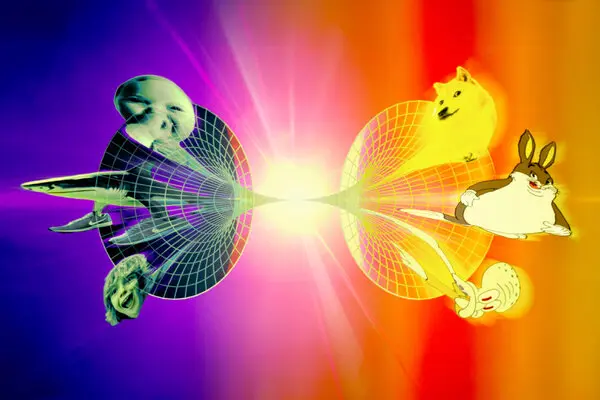
Meme Culture as Contemporary Pop Art
The relationship between meme culture and contemporary art is impossible to ignore. Just as Pop Art elevated everyday consumer products into cultural icons, crypto culture transforms internet memes into artistic symbols capable of expressing the aspirations, anxieties, and contradictions of an increasingly digital civilization.
A Shiba Inu can represent optimism.
A frog can symbolize collective imagination.
Pixelated graphics can evoke nostalgia for the early internet.
Glitch aesthetics can visualize the instability of technological change.
These symbols function much like Warhol’s soup cans or Lichtenstein’s comic panels. Their familiarity invites immediate recognition, while their reinterpretation encourages deeper reflection. Contemporary artists increasingly incorporate meme imagery into paintings, sculptures, and digital installations, acknowledging that internet culture has become one of the most influential visual languages of the modern era.
Within the CRYPTOPOP movement, memes are no longer disposable entertainment. They are legitimate artistic material that captures the emotional landscape of decentralized society.
The Future of Cultural Value
As blockchain technology continues to evolve, the relationship between memes, communities, and economic value will likely become even more sophisticated. Future generations may find it entirely natural that cultural influence possesses measurable economic significance, just as previous generations accepted the value of brands, intellectual property, or artistic masterpieces.
The essential lesson of meme coins is not that every joke deserves a market capitalization. Rather, it is that culture itself has become one of the most important forms of infrastructure within the digital economy. Stories, symbols, humor, and shared identity increasingly shape how value is created, distributed, and sustained across decentralized networks.
The internet has demonstrated that people organize around ideas long before they organize around institutions. Blockchain simply provides new mechanisms through which those ideas can acquire permanence and economic expression.
Conclusion
The rise of meme coins is not merely a curiosity within the cryptocurrency industry. It is evidence that finance has entered the realm of culture in ways previous generations could scarcely imagine. Dogecoin, Pepe, and countless other internet-born symbols reveal that value emerges not only from utility or scarcity but also from collective imagination, emotional resonance, and the extraordinary ability of communities to transform humor into lasting significance.
In the decentralized age, memes have become far more than jokes. They are stories people choose to share, identities people choose to embrace, and cultural symbols that unite millions across borders, languages, and backgrounds. Their economic influence is ultimately a reflection of something much deeper: the realization that in a connected world, attention, creativity, and shared belief can be as powerful as any traditional financial institution.
The future economy may continue to surprise us, but one lesson is already clear. Sometimes the most influential symbols of an era arrive not through carefully designed corporate strategies, but through a simple image that makes the entire internet smile.